Course Summary
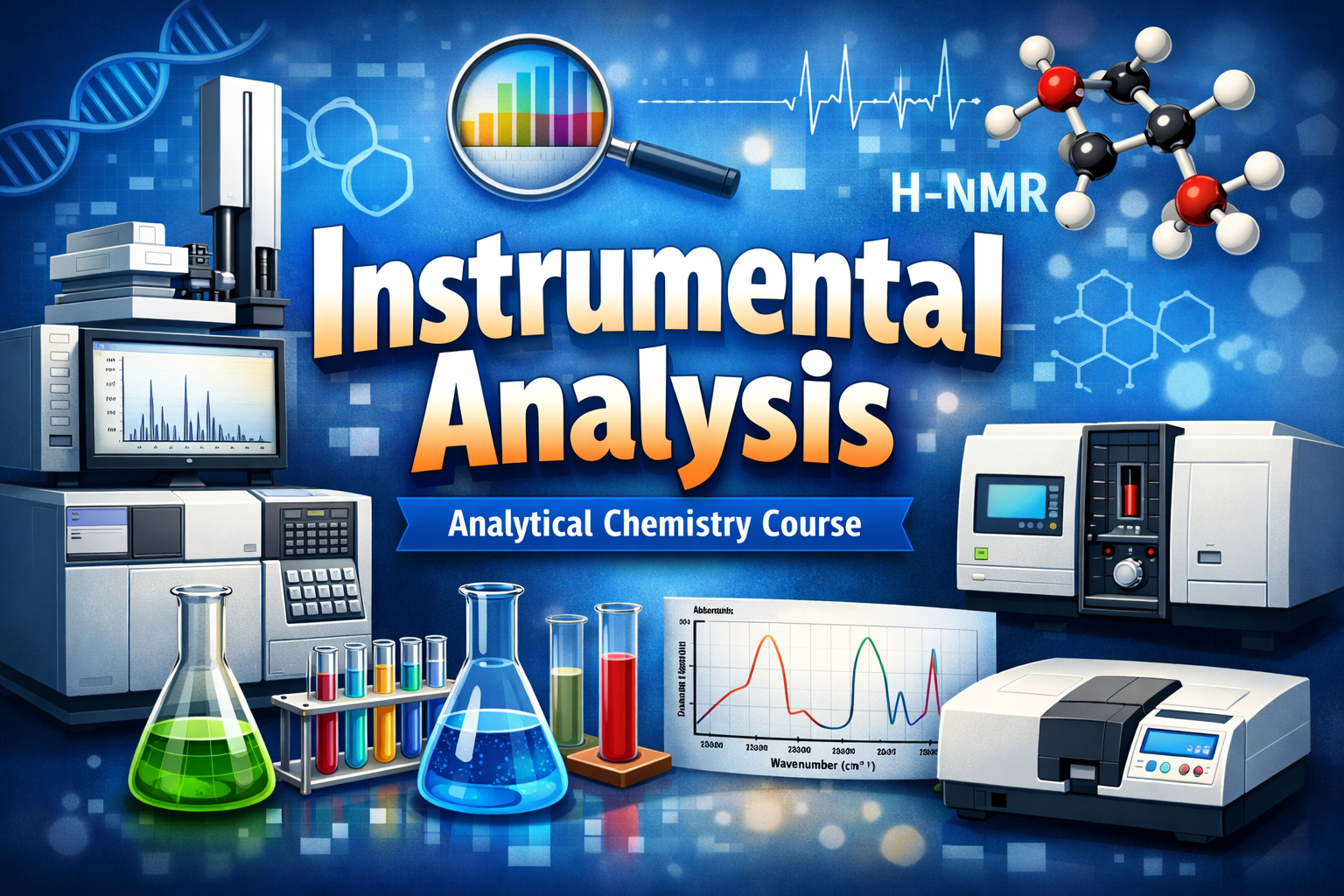
This course introduces trainees to the principles, theory, and applications of instrumental analytical techniques used in chemical analysis. Emphasis is placed on understanding how analytical instruments work, interpretation of generated data, method selection, and real-world applications in pharmaceuticals, environmental monitoring, and industrial quality control. The course is delivered fully online and focuses on conceptual understanding rather than hands-on laboratory practice.
Learning Outcomes
By the end of the course, trainees should be able to:
-
Explain the working principles of common instrumental analytical techniques.
-
Describe the major components and functions of analytical instruments.
-
Compare different instrumental methods and their applications.
-
Interpret analytical data such as spectra, chromatograms, and calibration curves.
-
Evaluate sources of error, accuracy, and precision in instrumental analysis.
-
Apply theoretical knowledge to solve analytical problems in real-world case scenarios.
Doable Online Learning Activities (No Practical Lab Work)
-
Recorded & Live Online Lectures – Concept-based explanations of spectroscopy, chromatography, and electrochemical methods.
-
Instrument Walk-Through Videos – Pre-recorded demonstrations showing instrument components and operation.
-
Data Interpretation Exercises – Analysis of provided spectra, chromatograms, and numerical datasets.
-
Case Study Discussions – Online discussions on pharmaceutical testing, environmental analysis, and food quality control.
-
Assignments & Worksheets – Method selection questions, short essays, and problem-solving tasks.
-
Quizzes & Online Tests – MCQs and short-answer assessments to check understanding.
-
Group Presentations (Virtual) – Trainees present on selected analytical techniques or applications using slides.
-
Reading & Reflection Tasks – Review articles, standards (e.g., pharmacopeial methods), and short reflection summaries.
- Teacher: Raphael Indakwa